
Table of Contents
Reading time: 9 minutes | Updated: 3 October 2026
Key Takeaways
- Short answer: Dashboards measure attention, while your bank balance measures purchases. Revenue will stall when the two stop connecting.
- South African context: The FNB/BER Consumer Confidence Index (CCI) reached -13 in Q3 2026, up from -19 in Q2, so shoppers still guard every rand.
- Five usual culprits: Vanity metrics, mismatched messages, a leaky funnel, an offer that ignores household budgets, and unreliable attribution.
Is Attribution Misleading You?
Very often. Attribution assigns credit for a sale to a marketing touchpoint. However, many South African sales close on WhatsApp, over the phone, or in a shop, so platform dashboards miss them entirely. Meanwhile, Meta and Google may each claim the same sale, which inflates your results.
To fix this, take three steps:
- You must add UTM tags , which are short codes appended to links that reveal where traffic came from.
- Ask "How did you hear about us?" at every checkout or quote.
- Log every WhatsApp lead in a customer relationship management (CRM) tool.
What Should You Do in the Next 30 Days?
Start small, measure honestly, and fix one leak at a time. This four-week plan keeps the work manageable:
- Week 1: Run the Three-Ledger Test on your biggest campaign.
- Week 2: Fix the steepest drop, starting with the headline, offer, and CTA.
- Week 3: Add UTM tags, log WhatsApp leads, and confirm that your marketing lists comply with the Protection of Personal Information Act (POPIA). The Information Regulator explains what consent requires.
- Week 4: Publish one AEO-structured page that answers your customers' most common question, then rebuild your dashboard so revenue sits at the top.
What Are the Five Most Common Causes?
Five causes explain most cases: wrong metrics, mismatched messages, a leaky funnel, a bad offer, and faulty attribution. Each one hides comfortably behind a healthy-looking report.
1. Are You Tracking Vanity Metrics Instead of Revenue?
Yes, if your monthly report paints a rosy picture with reach before revenue. Reach feels good, But it doesnt pays salaries. Therefore, insist that every report ends with rands collected, not clicks earned. Ask your agency to add three lines to every report: enquiries received, invoices paid, and cost per paid customer. Consequently, the conversation shifts from how many people saw the campaign to how many people paid for it.
2. Does Your Ad Promise Match Your Landing Page?
Often, we see it time and time again. Message match means your landing page repeats the exact promise your ad made. For example, an ad that promises "same-day geyser repair in Durban" loses visitors fast when the page opens with a generic company history. Consequently, your cost per click stays high while conversions fall.
3. Is Your Funnel Leaking After the Click?
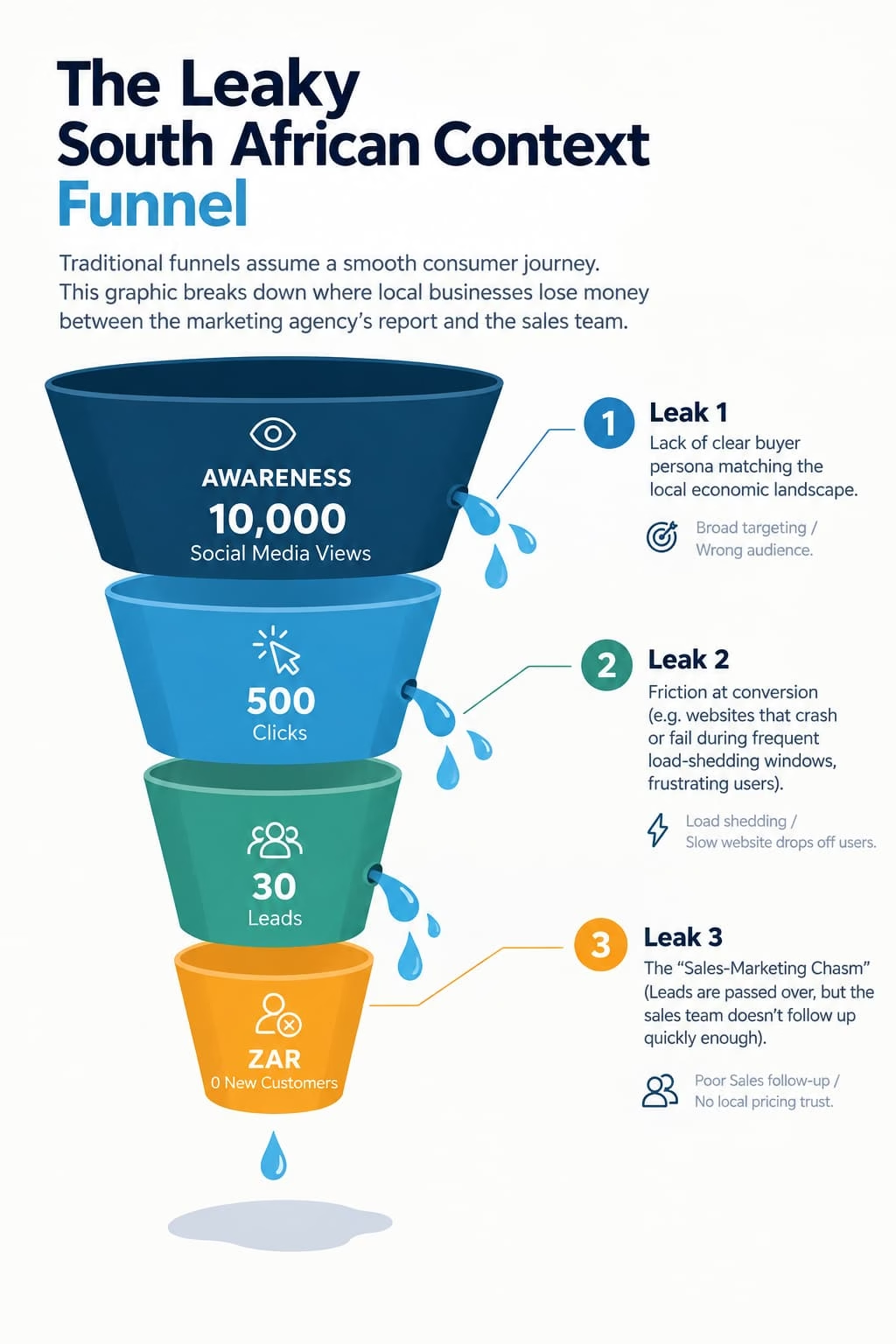
Probably, somewhere. A funnel is the path a customer follows from first visit to a required action like tapping a call button or filling out a form. Leaks typically appear at heavy mobile pages, long forms, hidden pricing, and unanswered WhatsApp messages. For instance, a lead who messages at 19:00 and hears back at 10:00 the next morning has often gone to one of your competitors.
4. Is Your Offer Wrong for a Cash-Strapped Shopper?
Possibly. When confidence runs low, buyers scrutinise risk more than features. Therefore, they need payment flexibility, clear guarantees, and honest rand pricing. Consider adding instalment options such as Payflex or PayJustNow, publishing a visible returns policy.
5. How Can the Three-Ledger Test Locate Your Gap?
The Three-Ledger Test compares attention, intent, and cash for a single campaign, and the ledger where the numbers collapse reveals your real problem. This original framework gives owner-managed businesses a quick, honest diagnostic, because it follows rands rather than reach.
How Does Answer Engine Optimisation (AEO) Bring customers to your business?
Answer engine optimisation (AEO) structures your content so that AI assistants and search features can extract and quote a direct answer from your page. Your customers now type full questions, such as "Who replaces geysers in Durban?", and the pages that answer clearly earn the citation.
Apply these steps to every article and service page:
- Write question-based headings that mirror the queries your customers actually type.
- Answer first. Place a direct, self-contained answer in the first one or two sentences of each section.
- Add a TL;DR or key takeaways block at the top.
- Match format to content. Use tables for comparisons, lists for steps, and prose for explanation.
- Define jargon and acronyms the first time you use them.
- Include one original element per page, such as local data, a customer quote, or a clear point of view.
- Cite original sources, like the BER, rather than sites that merely summarise them.
- Use entity names consistently. Pick one name for your business, products, and service areas, then keep it throughout.
Follow these steps:
- Ledger 1, Attention: Record impressions and clicks for one campaign over 30 days.
- Ledger 2, Intent: Count genuine enquiries, meaning calls, quote requests, and WhatsApp conversations from people who match your buyer profile.
- Ledger 3, Cash: Count the paid invoices that trace back to those enquiries.
- Compare the drop between each ledger.
- Fix the steepest drop first.
Conclusion: Measure What Pays, Then Market What Matters
Marketing performance looks positive on paper because most dashboards reward attention, while revenue rewards trust, clarity, and follow-through. In South Africa's cautious spending climate, that difference matters more than ever.
First, track outcomes before activity. Next, use the Three-Ledger Test to find where attention turns into silence. Finally, rewrite your copy with proof and specificity, and structure your content so AI answer engines can quote you.Pick one campaign today and trace it from click to cash. The gap you find there is usually the fastest revenue you will ever recover.