Should SMEs focus on inbound or outbound lead generation?
Inbound lead generation attracts high-intent prospects organically by offering valuable content that builds trust and lowers long-term customer acquisition costs. Outbound lead generation uses proactive direct outreach to create an immediate sales pipeline, but requires strict adherence to South African privacy legislation such as the Protection of Personal Information Act (POPIA). South African SMEs see the most robust growth when combining outbound tactics for short-term revenue with an inbound strategy for long-term compounding authority.
Table of Contents
What is the difference between inbound and outbound lead generation for South African SMEs?
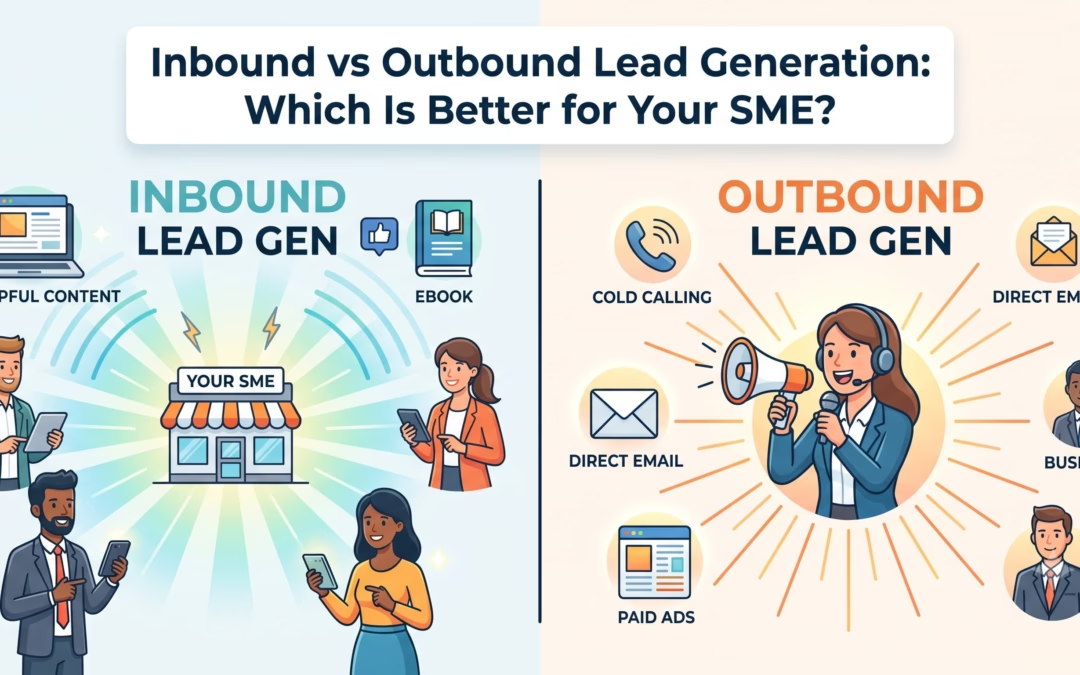
With inbound lead generation, potential customers are naturally drawn to your business when they themselves search for solutions, while with outbound lead generation your marketing message is actively pushed directly to a selected group of potential clients. The main difference between the two lies in buyer intent, the initiation of contact, and the amount of time it takes to turn an inquiry into a closed deal.
Core differences
Starting an engagement: Inbound involves a 'pull' approach in which the potential customer reaches out to you first after coming across your digital content, whereas outbound is a 'push' method in which your sales or marketing team makes contact by using direct channels.
- The level of buyer intent is high for inbound prospects since they are actively looking for solutions to a particular pain point; outbound prospects on the other hand have either a passive or unknown level of intent and therefore require your team to first create awareness of the problem before proposing a solution.
- When it comes to asset ownership and longevity, Inbound produces permanent digital assets—such as articles, tools, and guides—which continue to attract leads over the long term, whereas Outbound depends on constant manual outreach or on keeping up ongoing paid campaign spending, since lead generation stops as soon as the spending ceases.
- In relation to the South African market, SMEs located in competitive industrial parks, tech incubators, and the service sectors have to consider the large initial time commitments against the continued financial costs when deciding between these options.
What is inbound lead generation and how does it work?
Inbound lead generation is a marketing approach which is focused on the customer and attracts potential clients by creating content that is both highly relevant and designed to solve their particular problems. This method is in line with current buying behaviour since buyers in both business-to-business (B2B) and business-to-consumer (B2C) situations carry out online research about products and services well before they get to the adoption stage.
The Four Stages of the Inbound Funnel:
-
-
Attract: Drive qualified traffic to your digital platforms using Search Engine Optimisation (SEO)—the process of enhancing website content to achieve higher rankings on search engine results pages like Google—alongside educational social content and local market analysis.
-
Convert: Turn website visitors into identified leads by offering high-value resources (such as gated whitepapers, tax templates, or operational checklists) in exchange for contact details on optimized landing pages.
-
Nurture: Educate and build trust with eads through automated email nurture sequences, delivering targeted insights until the prospect is qualified and ready to buy.
-
Delight: Provide exceptional post-sale onboarding and ongoing value, converting satisfied clients into advocates for your brand who generate word-of-mouth referrals.
-
Key Financial Advantages of Inbound:
-
-
Lower Customer Acquisition Cost (CAC): The total financial expenditure required to gain a single new customer drops over time as organic traffic scales.
-
Compounding Return on Investment: Content published today continues to capture leads two to three years later without additional media spend.
-
Higher Conversion Rates: Leads who self-educate and initiate contact convert into paying clients at significantly higher rates than cold contacts.
-
Which inbound marketing channels are most effective for local businesses?
We've had success working with the channels local search engine optimization, industry-specific content marketing, and opt-in educational email series.
Top-Performing Inbound Channels:
-
-
Local SEO & Google Business Profile: Optimising profile fo for location-specific search queries (e.g., "commercial refrigeration repairs Durban" or "POPIA legal compliance consultant Pretoria") ensures high visibility among buyers ready to purchase.
-
Thought Leadership Content: Publishing detailed breakdowns on LinkedIn and company blogs regarding regional market shifts, economic trends, or local compliance updates builds industry authority.
-
Interactive Digital Tools: Offering free ROI calculators, SARS tax compliance checklists, or solar power usage estimation tools captures contact information from high-intent leads.
-
Educational Webinars & Podcasts: Hosting live virtual sessions addressing regional operational challenges attracts decision-makers seeking practical solutions.
-
What is outbound lead generation and is it still effective?
Outbound lead generation is a proactive sales and marketing approach where a company contacts targeted prospects directly without prior engagement. It styill is a highly effective strategy for SMEs requiring immediate pipeline velocity or aiming to secure enterprise-level accounts.
Core Principles of Modern Outbound:
-
-
Targeting: Teams identify an Ideal Customer Profile (ICP)—an explicit description of the business type, industry size, and revenue bracket that gets maximum value from your offering. .
-
Direct Outreach Engagement relies on highly personalised cold emails, direct messages on professional networks, tailored account-based pitches, and direct phone outreach.
-
Speed and Predictability: Unlike organic strategies that require months to mature, outbound campaigns generate sales conversations within days of launch.
-
Navigating POPIA and Regulatory Compliance:
- Understanding POPIA Obligations: Outbound marketing in South Africa must strictly comply with the Protection of Personal Information Act (POPIA), enforced by the
Information Regulator of South Africa - Legitimate Interest vs. Direct Spam: B2B outreach is allowed when directed at business representatives where a legitimate commercial interest exists, provided contacts can easily opt out
- Data Integrity Practices: Purchasing bulk, unverified email lists poses severe financial, legal, and deliverability risks; building custom, thoroughly researched prospect lists is mandatory for compliance.
-
Which outbound strategies work best in South Africa?
Account-Based Marketing (ABM), highly personalized cold email campaigns, and multi-touch LinkedIn outreach yield the best results for South African outbound operations.
-
High-Yield Outbound Strategies:
-
Account-Based Marketing (ABM): A strategic B2B approach where marketing and sales teams align to treat individual high-value accounts as distinct markets, delivering hyper-customized proposals to executive key decision-makers.
-
Hyper-Personalised B2B Cold Email: Sending individual, value-focused communications that directly reference a prospect's recent company announcements, sector pressures, or operational bottlenecks.
-
LinkedIn Sales Navigator Prospecting: Leveraging specialized filtering tools to connect directly with executive decision-makers across South African commercial centers.
-
Strategic Cold Calling: Phone outreach still works well in traditional sectors like agriculture, mining, manufacturing, and logistics when preceded by digital touchpoints and thorough account research.
-
Frequently asked questions
Is cold calling legal in South Africa under POPIA?
Yes, cold calling is legal in South Africa if it complies with POPIA regulations, meaning the caller must immediately disclose their identity, process data lawfully under legitimate business interest, and respect opt-out requests.
What is Customer Acquisition Cost (CAC) and how is it calculated?
Customer Acquisition Cost (CAC) is the total expense of sales and marketing efforts required to acquire a new client. It is calculated by dividing total marketing and sales costs by the number of new customers acquired during a specific timeframe.
How long does inbound SEO take to generate qualified leads?
Inbound SEO typically requires three to six months to deliver steady lead flow, as search engines require time to evaluate domain authority, index new pages, and rank content against competitors.
What is the single best platform for B2B lead generation in South Africa?
LinkedIn is the primary platform for local B2B lead generation, offering granular search filters to target decision-makers by industry, job title, company size, and geographic location.