Key Takeaways - Top places to list a small business
-
Core Listings: Claim Google Business Profile, HelloPeter, Brabys, Yellow Pages, Apple Business Connect, and Bing Places.
-
NAP Consistency: Keep your business Name, Address, and Phone number consistent across directories.
-
Local Relevance: Prioritize Durban, Johannesburg, Cape Town, and industry-specific directories.
-
Citation Audit: Remove duplicates and standardize listings to strengthen local search visibility.
Table of Contents
What Is a Local Citation and Why Does It Matter?
A local citation is any online mention of a business's name, address, and phone number.
Search Engine Optimisation (SEO) depends heavily on consistent data points across the web. When Google, Bing, or Apple Maps scan the internet and detect matching details across multiple trusted South African platforms, their confidence in your business increases. Consequently, your business achieves higher visibility on the Search Engine Results Page (SERP) and inside the localised "Local Pack"—the map-based top section of local search results.Citations not only help with seo , but also bring in new customers.
South African consumers actively use directories such as HelloPeter to check out a companies reputation before using their product or service. Therefore, maintaining accurate contact information on these channels builds consumer confidence while feeding search engine algorithms accurate business metadata.
Which Top Local Directories Should Every South African Business Claim First?
In our opinion Every South African business must prioritise listing on high-authority platforms including
- Google my Business
- Bing Places
- Brabys
- Apple Business Connect
- Hellopeter
- Snupit
Tier 1 Citation Platforms
Google my business
Google Business Profile forms the core foundation of local SEO in South Africa. Claiming and optimizing a GBP profile allows your company to appear in Google Maps and local search results. Fill out every field, including exact business hours, physical street address, service areas, primary categories, and photos.
HelloPeter
HelloPeter operates as South Africa's largest review and business directory platform. Because local consumers consult HelloPeter to evaluate operational integrity, maintaining an active profile sends direct trust signals to search engine crawlers while protecting your brand reputation.
3. Brabys
Brabys is one of South Africa’s oldest commercial directories that has successfully made the transition from print to digital search. A full listing on Brabys provides a trusted local backlink and cements your geographic footing on South African soil.
4. Yellow Pages South Africa (Say Yellow)
Yellow Pages South Africa is still a recognised directory brand across the country. This directory allows you to list your exact NAP details to help reinforce your location data across traditional local indexes.
5. Bing Places for Business & Apple Business Connect:
Apple Business Connect drives Apple Maps for millions of iPhone, iPad and Mac users in South Africa. Bing Places also captures desktop searches in corporate environments where Microsoft Edge is the default browser. Sync your verified Google Business Profile directly to Bing Places to speed up
Cylex South Africa, Hotfrog South Africa, Snupit
These additional directories help bolster your local citation profile. Snupit links local service providers with active buyers in the major metropolitan areas such as Gauteng, the Western Cape and KwaZulu-Natal. Free business listings like Cylex South Africa and Hotfrog South Africa, both of which index well on Google searches and offer wide NAP confirmation.
How Do Niche and Location-Specific Directories Impact Regional SEO in South Africa?
Niche and city-specific directories very underated when it comes to boosting SEO . Search engines don't just care that you're listed somewhere — they care where it's listed. . A mention in a directory that's actually relevant to your industry or your city carries far more weight than a spot on some generic, catch-all listing site.
So if your business operates in Johannesburg, Cape Town, or Durban, getting listed on sector-specific portals or municipal directories does more than just create a backlink. It signals to search engines that you're a genuine, established player in that specific market — not just another name in a long list.
Category-Specific (Niche) Platforms
- Hospitality and Tourism: If you manage or own an accommodation, tour, or restaurant business in South Africa, platforms like TripAdvisor, TravelStart, and SA-Venues are gold. They send exactly the kind of local, industry-specific signals search engines are looking for.
- B2B and Industrial: For manufacturers, engineers, and commercial suppliers, listings on sites like EngNet Global and South Africa B2B do more than just get your name out there — they tell search engines you're a legitimate player in that space.
- Professional Services: If you're in law, finance, or medicine, getting listed on trusted registries — for insstance the Law Society of South Africa, Medpages, or reputable financial advisor directories — carries real weight. These aren't just directories; prrof that you are trustworthy.
City and Region-Specific Platforms
City-focused directories establish localized relevance. For instance, listing a Cape Town plumbing service on a Western Cape regional directory signals clear geographic boundaries to search algorithms.
-
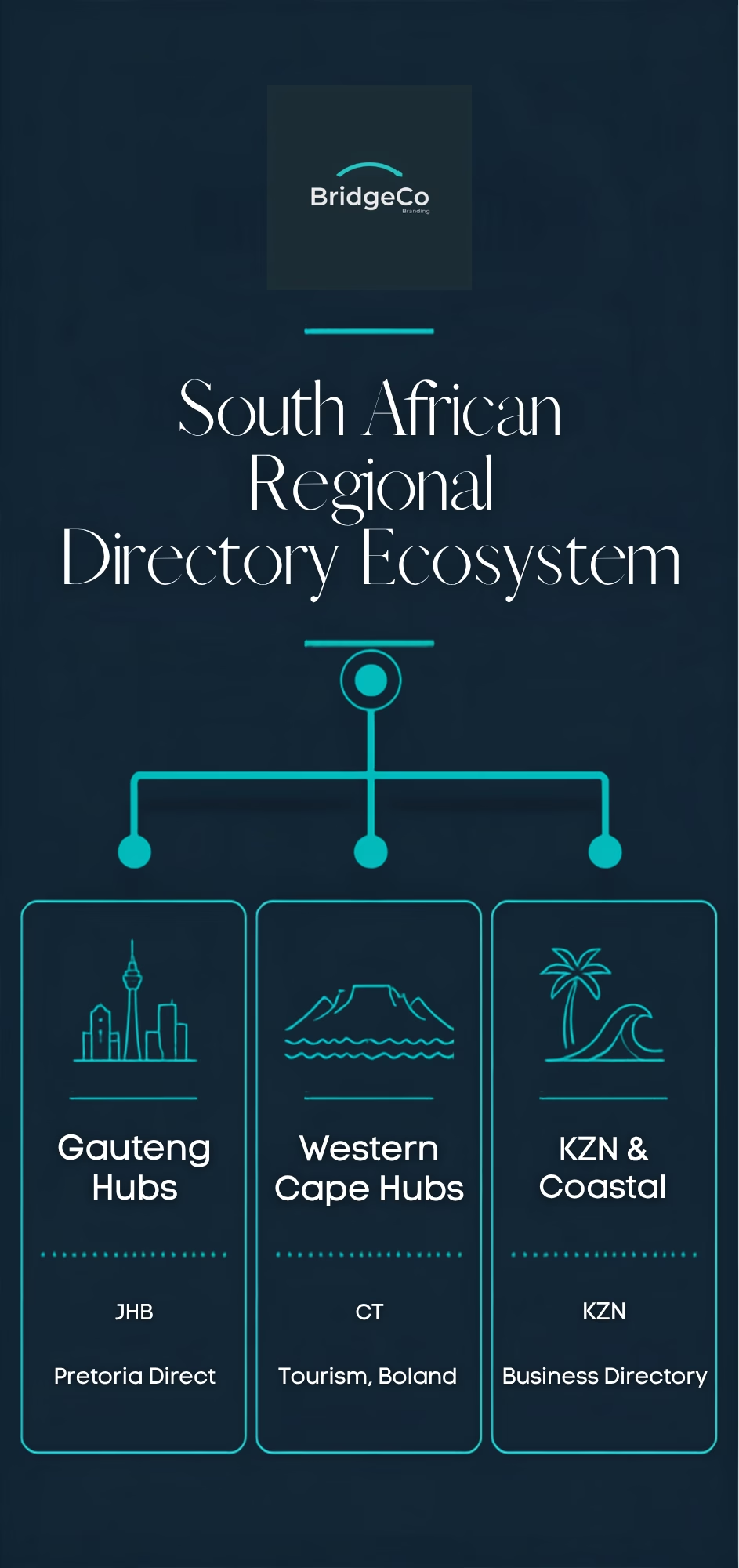
Gauteng: Register with local business networks like the Johannesburg Chamber of Commerce and Industry (JCCI) or regional Pretoria business listings.
-
Western Cape: Capitalize on directories managed by the Cape Chamber of Commerce and Industry or regional Western Cape commercial portals.
-
KwaZulu-Natal: Ensure visibility on eThekwini municipal listings, Durban business directories, and regional North Coast chambers.
What Is the Mzansi Citation Authority Framework?
The Mzansi Citation Authority Framework categorises South African citation platforms based on two distinct axes: Search Engine Trust and Local Consumer Engagement. Strategic implementation needs systematically securing listings across all four areas of this matrix.
-
Quadrant I (Core Search Foundations): These are the platforms that search engines trust most. Even though people don't interact with these directly. Google Business Profile, Apple Maps, and Bing Places feed your exact location straight into the mapping systems that power local search results.
-
Quadrant II (Consumer Trust Engines): High search engine trust, high consumer engagement. Platforms like HelloPeter and official industry registries validate customer sentiment and legal compliance simultaneously.
-
Quadrant III (Signal Broadeners): Moderate search engine trust, lower direct conversion. Legacy portals like Brabys, Cylex, and Hotfrog broaden the web of matching NAP signals.
-
Quadrant IV (Local Niche Movers): These are the platforms that turning browsing into action. Snupit, and TripAdvisor attract people that are ready to book.
How Should South African Businesses Audit and Fix Inconsistent NAP Data?
To audit and correct NAP data, you must establish an official baseline format, locate existing web mentions, identify conflicting information, and manually request edits on inaccurate profiles. Cleaning up citation inaccuracies prevents search engines from penalizing your local map rankings due to ambiguous location signals.
How to do an audit
Document Your Official NAP Baseline: Establish a standardized document containing your exact company name, street address, landline phone number, website URL, and tax/CIPC registration details.
Map Your Digital Footprint
Perform targeted search queries on search engines using operational parameters:
- Log Conflicting and Duplicate Profiles: Record every active listing in a spreadsheet, making special note of:
-
Outdated addresses from previous office relocations.
-
Variant business names (e.g., "ABC Plumbers CC" vs. "ABC Plumbers").
-
Incorrect regional dialing codes (e.g., confusing 011 for Johannesburg with 012 for Pretoria)
-
Duplicate profiles created accidentally by past employees or marketing agencies
-
Submit Citation Correction Requests: Log into each directory account to update details directly. Where self-service access is unavailable, contact directory administrators via official support forms to request listing merges or deletions
-
Verify Primary Hub Alignments:Make sure your Google Business Profile address matches the physical location displayed on your website's contact page footer and schema markup
-
You need to contnously monitor your citations Review top citation profiles quarterly to prevent third-party user edits from overwriting verified business details.
What Common Local Citation Mistakes Harm South African Search Rankings?
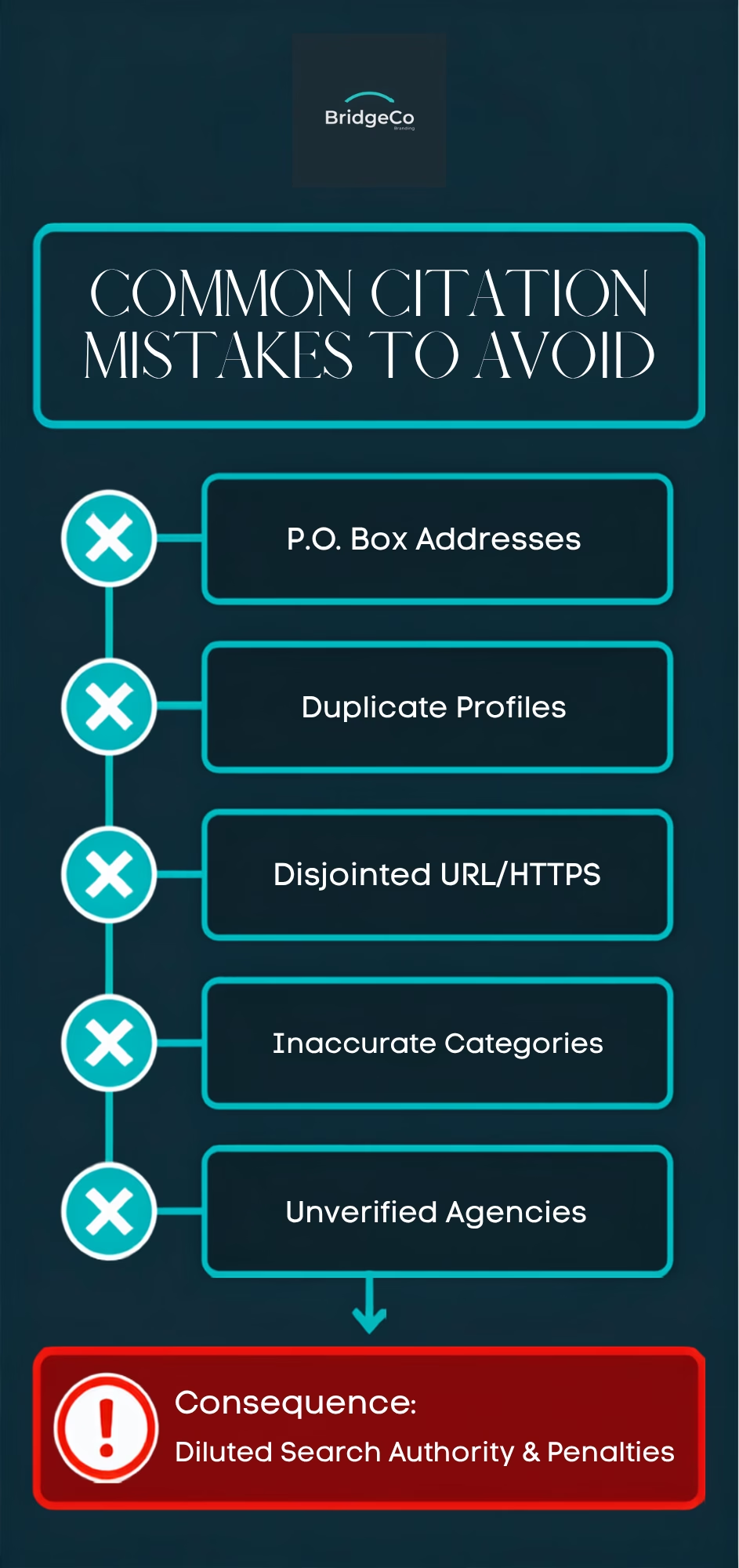
Common citation mistakes include listing non-physical P.O. Box addresses , duplicate listings, mismatching website protocols, and choosing incorrect directory categories. These errors fragment your digital footprint, dilute search engine confidence, and diminish your local SERP performance.
- Using P.O. Boxes or Virtual Addresses: Google doesn't like virtual offices or unstaffed mailboxes — and it will penalise listings that use them. Make sure the address on your profile leads to a real, physical location where your business actually operates.
-
Ignoring Duplicate Directory Profiles: If your business has more than one listing on sites like Brabys or Cylex, you're splitting your reviews and diluting your authority across multiple profiles instead of building it up in one place. Track these down and either merge them or delete the outdated ones.
-
Inconsistent Protocol Formatting (HTTP vs. HTTPS): Pick one version of your website address and stick to it. If older listings still point to secure site instead.
-
Choosing Misaligned Business Categories: Choosing the wrong category on Google Business Profile or Snupit means your listing simply won't show up when the right customers search for you. Keep your primary category tightly matched to what you actually offer.
-
Outsourcing to Low-Quality Global Aggregators: Be careful with automated citation tools — a lot of them push your business info to spammy, irrelevant directories overseas that mean nothing to a South African audience. It's worth the extra effort to manually submit your listing to directories that actually carry weight locally.