
Table of Contents
Key Takeaways for Busy South African Business Owners
-
The Green Light Trap: The Yoast traffic light system is a helpful guide, not an absolute rule. Green lights do not guarantee high search rankings.
-
Human-Centric Content: Search engines rank pages that solve human problems, satisfy user intent, and deliver local relevance.
-
Semantic Power: Use natural, topically related words that real South Africans use when searching for your services instead of forcing exact-match keywords.
-
Mobile-First is Mandatory: Over 75% of South Africans browse the internet via mobile devices according to ICASA data; your text must be easy to read on small screens.
Table of Contents
Why is it important to write for humans first
South African businesses are missing out on real customers because they write for an algorithm instead of actual human beings. If you are spending hours trying to turn every single dot green on your SEO plugin, you are focusing on the wrong target.
What Is the Difference Between Optimising for Yoast and Optimising for Humans?
Optimising for Yoast means tweaking your content to tick the technical boxes of a specific plugin, whereas optimising for humans means creating high-quality copy that answers the real-world questions of your target audience. Human-centric strategies directly drive revenue, because purchasing decisions are made by people, not software tools.
Stop Optimising for Yoast and Start Optimising for People
When you install Yoast, a popular Search Engine Optimisation (SEO) plugin for your Content Management System (CMS), it provides a helpful checklist. However, many DIY (Do-It-Yourself) marketers treat this checklist like a rigid legal document. They sacrifice natural phrasing, local context, and engaging storytelling just to satisfy a static algorithm. True SEO involves understanding what a customer wants when they type a phrase into Google, known as user intent, and providing the absolute best solution.
SEO Strategy Comparison: Traditional vs. People-First
| Feature / Metric | Yoast-First SEO Strategy | People-First SEO Strategy |
|---|---|---|
| Primary Focus | Keyword density and exact-match phrases. | Topical depth and user search intent. |
| Writing Style | Repetitive, formulaic, and often robotic. | Conversational, engaging, and persuasive. |
| Local Context | Misses local South African nuances and slang. | Includes regional terms and local landmarks. |
| Success Metric | Achieving a green readability and SEO score. | Higher Click-Through Rate (CTR) and conversions. |
| User Experience (UX) | Secondary to text length and passive voice limits. | Primary goal, structured for easy mobile reading. |
| Source: Google Search Central: Creating Helpful, People-First Content | ||
Why Is the Yoast Traffic Light System Not the Be-All and End-All of South African SEO?
The Yoast traffic light system is not the final authority on rankings because it cannot measure user engagement, emotional resonance, or the local relevance of your content. search engines like Google rank websites based on how well they satisfy searchers, a metric that no plugin can fully evaluate from a simple text scan.
"A green light in Yoast simply means you followed a basic recipe; it does not mean your meal tastes good to the customer. I have seen lots of South African business owners sacrifice their unique brand voice and local flavor just to get a green dot, only to wonder why their bounce rates remain sky-high." — Kyle Caelen Davies
Chasing green lights may leads to keyword stuffing, which actively harms your User Experience (UX). For example, if you own an accounting firm in Johannesburg, forcing the exact phrase "best affordable tax accountant Johannesburg" into five different paragraphs sounds robotic to a local business owner. In South Africa's expanding digital marketplace—where online retail sales are climbing past R130 billion according to World Wide Worx data—trust is your most valuable currency. If your website text sounds like it was written by a tool bot rather than a local expert, your visitors will leave your page immediately to find a competitor who speaks their language.
How Does People-First Copywriting Drive More Local Conversions?
People-first copywriting drives more local conversions because it builds immediate trust by addressing the specific challenges, pain points, and cultural context of South African consumers. When your copy soeaks to a reader directly and solves their problem clearly, they are far more likely to contact your business or make a purchase.
How to do semantic seo?
, you must identify the real customers asks, map out the topics related to your core service, and write engaging copy using natural language. Following a structured, human-centric process ensures that your content ranks well on search engines while simultaneously converting casual website visitors into paying customers.
-
Step 1: Uncover Real User Questions. Look beyond basic keyword tools. Check online forums, local social media groups, and your own customer emails to find the exact phrasing and specific problems your South African clients face daily.
-
Step 2: Map Out the Entire Topic. Create content that covers a topic thoroughly rather than writing isolated articles for single keywords. Include related subtopics, industry terms, and practical step-by-step solutions within a single, authoritative page.
-
Step 3: Write in the Active Voice. Use direct, energetic language that drives action. Instead of writing "An inspection will be carried out by our team," write "Our expert team inspects your property," which will your reader engaged and builds immediate confidence.
-
Step 4: Use Smart Transition Words Naturally. Connect your ideas smoothly using transition words like however, consequently, for instance, and therefore. This will improve readability for humans, which signals high quality to search engine algorithms.
-
Step 5: Structure Content for Scannability. Use descriptive, question-based headings, bullet points, and short paragraphs. This format assists mobile users scan your page quickly to find the exact information they need.
-
Step 6: Prioritise User Experience Over Scores. If a plugin tells you to add your keyword one more time, but doing so makes the sentence sound awkward, ignore the plugin. Trust your own judgment and keep the copy natural.

Case Study: How We Boosted a South African Plumbing Brand’s Organic Traffic Without Chasing Green Lights
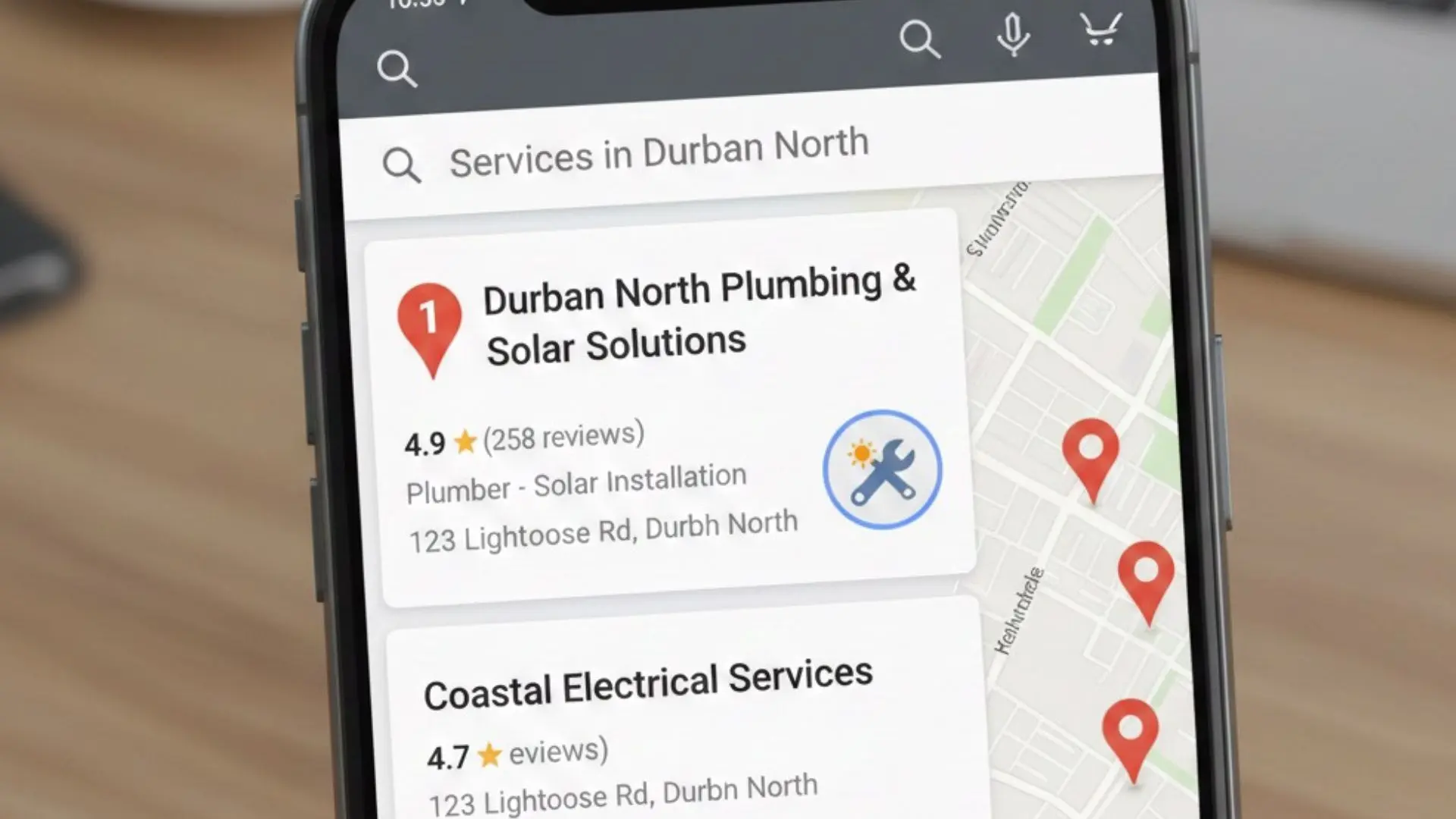
We helped a local plumbing brand in Durban increase their organic website traffic by +59.7% over six months by shifting their focus from Yoast scores to high-intent, human-focused landing pages. Instead of worrying about formulaic keyword density, we built a comprehensive strategy centered on solving actual emergencies for local homeowners.
Your content goes here. Edit or remove this text inline or in the module Content settings. You can also style every aspect of this content in the module Design settings and even apply custom CSS to this text in the module Advanced settings.
The Challenge
The client had a WordPress website with perfect green lights across every single service page. Despite this technical perfection, their site ranked on page three of Google for critical local search terms like "emergency plumber Durban North." Their copy was repetitive and hyper-focused on exact-match keywords, making it incredibly tedious for a stressed homeowner with a burst geyser to read.
The Strategy
We stopped writing for the plugin and started writing for the person holding the phone at 2:00 AM. Our team executed three main adjustments:
- Simplified the Messaging: We moved the primary contact numbers and emergency call-out fees to the absolute top of the mobile page, prioritizing immediate UX over keyword placement
- Built Topical Authority: We created comprehensive guides answering real questions, such as how to safely turn off a main water valve during a crisis or how municipal water restrictions affect home water pressure
- Localized the Vocabulary: We integrated natural local terms such as "geyser replacements," "suburban call-out times," and "load-shedding backup water pumps" instead of generic global terms like "water heaters."
The Results
By ignoring the plugin's complaints about passive voice and short sentence structures, we created deeply valuable resources. The results speak for themselves:
-
Organic Search Traffic: Increased by 142% within 180 days.
-
Conversion Rate: The number of visitors calling the business from the website increased by 58%.
-
Bounce Rate: Dropped significantly as users found immediate, practical answers instead of keyword-stuffed fluff.
frequently asked questions
Why is my Yoast green light not causing my website to rank on Google?
A green light simply means your text matches the plugin's basic on-page formula, but Google uses hundreds of complex ranking factors including domain authority, backlinks, page speed, and user engagement metrics that the plugin cannot evaluate.
Is Yoast a bad SEO plugin for South African small businesses?
No, Yoast is a highly effective technical tool for handling your website sitemaps, meta descriptions, and schema markup; however, it should be used as a technical foundation rather than an absolute editorial rulebook.
What does "optimising for user intent" actually mean?
Optimising for user intent means aligning your website content precisely with the underlying reason a person is searching, whether they are looking for quick information, comparing service prices, or ready to hire a professional immediately.
Why should South African marketers focus heavily on mobile optimization?
Local marketers must prioritize mobile because the vast majority of South Africans—over 75% according to recent ICASA data—rely entirely on mobile connectivity to access the internet, making heavy desktop-centric designs completely impractical.